Hormuz: Naval Power Meets Insurance Control


Source: https://x.com/i/status/2051637882540937455
Observation
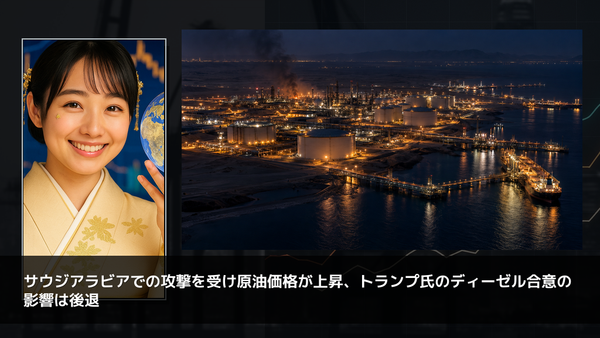
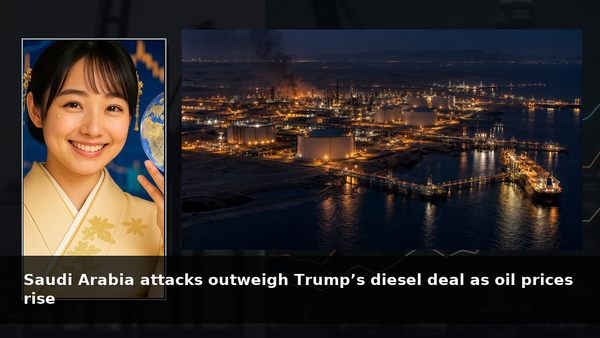
On May 3–4, 2026, the United States launched Project Freedom to reopen the Strait of Hormuz to commerce after Iranian attacks and threats. U.S. Central Command (CENTCOM) said two U.S.-flagged merchant vessels transited under U.S. protection, that U.S. forces intercepted Iranian cruise missiles and drones, and that helicopters destroyed six Iranian small boats; Adm. Brad Cooper said about 15,000 personnel, guided‑missile destroyers, more than 100 land‑ and sea‑based aircraft, and multi‑domain unmanned platforms were committed. Oil reacted immediately: Brent crude jumped 5.8% to settle at $114.44 on May 4. Iran disputed U.S. claims, said it fired on foreign vessels, and the UAE reported drone and missile incidents in Fujairah and at sea.
The live question is whether a U.S.-led defensive umbrella can restore routine Hormuz transits at scale without sparking escalation or deterring shipowners via insurance. It matters because the practical gatekeepers are not warships but underwriters and operators: if they don’t reopen coverage and routing, global energy and freight costs stay elevated.
Our call: for energy portfolio managers, treasury fuel buyers, and freight‑exposed equity PMs, hedge for a 1–3 month window of constrained Hormuz throughput and elevated war‑risk pricing; avoid “rapid normalization” trades until insurers and two or more top owners publicly resume standard routing.
Geoeconomic Structure
A skeptic’s first pushback is simple: with U.S. destroyers, aircraft, and intelligence, surveillance and reconnaissance (ISR) blanketing the strait, why wouldn’t traffic normalize quickly? Because the decisive gate is economic, not naval. Shipowners will not commit schedules or hulls until the London market’s Joint War Committee (JWC) and protection‑and‑indemnity (P&I) clubs relax Listed Areas and premiums, and until their boards accept that a single missile, drone, mine, or small‑boat incident won’t strand crew or void coverage. CENTCOM can enable a few hulls to transit under its layered defensive umbrella; only insurers and operators can restore scale.
Project Freedom shows its strength and its ceiling at once. On opening day CENTCOM reported two U.S.-flagged transits and six Iranian small boats neutralized. That proves U.S. support can puncture a blockade episodically. But Iran doesn’t need sea control to sustain deterrence; asymmetric harassment, deniable strikes, and selective pressure on bypass hubs (e.g., attacks reported near Fujairah) keep perceived risk high. That is enough for JWC to maintain restrictive listings and for boards to route around the strait. In geoeconomic terms, naval presence is a force‑projection node; underwriting is the chokepoint.
Private gatekeepers translate kinetic noise into economic closure. Listed Areas and war‑risk premia are the jurisdictional venue where “access” is decided. Unless JWC and major P&I clubs (Gard, NorthStandard, London P&I) publish easing and owners like Maersk, Mediterranean Shipping Company (MSC), HMM, and China COSCO Shipping (COSCO) log repeat, Automatic Identification System (AIS)‑verified passages over weeks, the value chain fragments: supported one‑offs for select flags while bulk trades detour to pipelines and longer sea routes. That keeps basis differentials wide and freight tight, as alternative corridors (Habshan–Fujairah, Saudi East–West, Omani ports) struggle under strain and remain tempting targets.
Third‑country escorts (for example, the Indian Navy shepherding national tankers) may move national cargoes but complicate common rules of engagement and don’t resolve the insurance problem for global fleets. Oman’s traffic‑coordination posture inside its waters is a swing factor, but again, only to the extent insurers and the International Association of Independent Tanker Owners (INTERTANKO) see predictable governance that underwrites routine routing. Until then, expect convoy‑style trickles, not normalized flow.
Nine Star Ki Reading
Read the London insurance market — JWC and the major P&I clubs — as a collective mindset that sets the appetite for risk. In that light, Five Yellow Earth (Gogō Dosei, 五黄土星) with the motif of “control” fits: this cluster decides, by fiat if needed, who may pass at what price.
The background here is centralized authority, a preference to regulate access through listings, exclusions, and premium spikes rather than absorb novel operational mitigations quickly. What is showing now is the same authority sitting at 中宮 (the center) — insurers occupy the focal seat. Background and surface are aligned, which means convoy headlines won’t, by themselves, unlock coverage; the gatekeeping posture is real, not a bluff. From 中宮 the next move is toward 乾宮 (a more formal, codified seat of authority): consolidation hardens into policy. Practically, that implies circulars and club notices that entrench current restrictions unless there is sustained, incident‑free movement to justify revision.
Recommendations
If you are an equity PM with energy/shipping exposure or a Fortune 500 treasury hedging fuel and freight, position for constrained flows and insurance‑driven friction. Maintain upside convexity to Middle East crude benchmarks and keep capacity for prolonged war‑risk premia. Defer reallocations into Hormuz‑exposed carriers and Gulf‑centric terminals until the underwriting gate visibly reopens; overweight bypass throughput and diversified routes while monitoring for codified easing by JWC/P&I.
- Strait of Hormuz AIS transit count: sustain at least 100 merchant transits per day for 14 consecutive days within the next 2–6 weeks.
- JWC/Lloyd’s and P&I bulletins: removal or narrowing of Listed Areas for Hormuz/Gulf and explicit reinstatement of standard war‑risk lines within 1 month.
- Owner behavior: two or more top‑10 owners (e.g., Maersk, MSC, HMM, COSCO) publicly resume standard Hormuz services and log repeat transits over 30 days.
- United Kingdom Maritime Trade Operations (UKMTO)/International Maritime Bureau (IMB) incidents: zero verified commercial‑ship casualties (hits/fatalities) in 30 days; any single verified casualty resets the clock.
Caveats and Open Questions
Three conditions would force a rethink:
- The Joint War Committee or leading P&I clubs lift or materially narrow Listed Areas and cut war‑risk premia for Hormuz within the next month. This explicit underwriting reversal would unlock routine routing despite residual kinetic risk.
- Major shipowners publicly resume standard services through Hormuz and demonstrate repeat AIS‑verified transits across 30 days. That would show board‑level risk acceptance and translate naval protection into commerce at scale.
- UAE/Oman harden and expand bypass capacity (e.g., Abu Dhabi National Oil Company’s (ADNOC) Habshan–Fujairah throughput) enough to mute global price sensitivity to Hormuz, lowering the premium for immediate normalization and changing route economics.
Lead‑time question: within 4–8 weeks, do we see both sustained at least 100/day AIS transits for two weeks and at least one JWC/P&I circular easing Gulf listings — or are you positioned for another quarter of constrained, convoy‑only flow?