"Navigating Economic Shifts: Nine Star Ki and Earth’s Wisdom"

Navigating the Shifting Sands of Global Commodity Markets: Cosmic Insights from Nine Star Ki
In a recent tweet, a significant observation was made about the current state of global commodity markets: "Gone are the days of free trade in commodities. Barriers and hoarding are the features of today’s markets." This tweet highlights a critical shift in the dynamics of international trade, moving away from the free trade ethos toward a landscape dominated by protectionism and resource hoarding. Such a transformation is not only reshaping the economic landscape but also affecting geopolitical and international relations on a grand scale.
Background and Context
Over the past few years, various developments have contributed to the decline of free trade in commodities:
- Geopolitical Tensions: Rising conflicts and strategic rivalries, like the U.S.-China trade war, have prompted nations to emphasize self-sufficiency over global trade, leading to disruptions in supply chains.
- Supply Chain Vulnerabilities: The COVID-19 pandemic unveiled the fragility of global supply networks, causing countries to stockpile resources and impose export restrictions to safeguard domestic availability.
- Resource Nationalism: Nations rich in natural resources, such as Indonesia, are implementing policies to retain control over commodities, impacting international trade flows.
- Climate Change and Environmental Policies: Efforts to mitigate climate change, including the EU's Carbon Border Adjustment Mechanism, are starting to influence commodity production and trade regulations.
These dynamics have profound political, economic, and international relations implications, ranging from national security concerns and shifting trade agreements to market volatility and inflationary pressures. Internationally, strained relations and alliance realignments are becoming more common as countries seek to secure access to essential resources.
🔮 Oracle Ayano's Mystical Commentary
In this era of transformation, we turn to the ancient wisdom of Nine Star Ki, a Japanese practice illuminating the cosmic energies that guide our lives. On February 23, 2026, the day star glows with the energy of Two Black Earth (二黒土星, Jikoku Dosei). Earth, within the Nine Star Ki framework, embodies stability and nurturing—a foundation amid the storm.
Imagine a café owner named Hana, witnessing the world shift from free trade to protectionism. This transformation echoes deeply within her fears about rising costs and supply chain disruptions. Yet, the Earth element provides reassurance, encouraging Hana to establish a strong foundation through diversification and community ties.
🖼️ Visual Symbolism Analysis
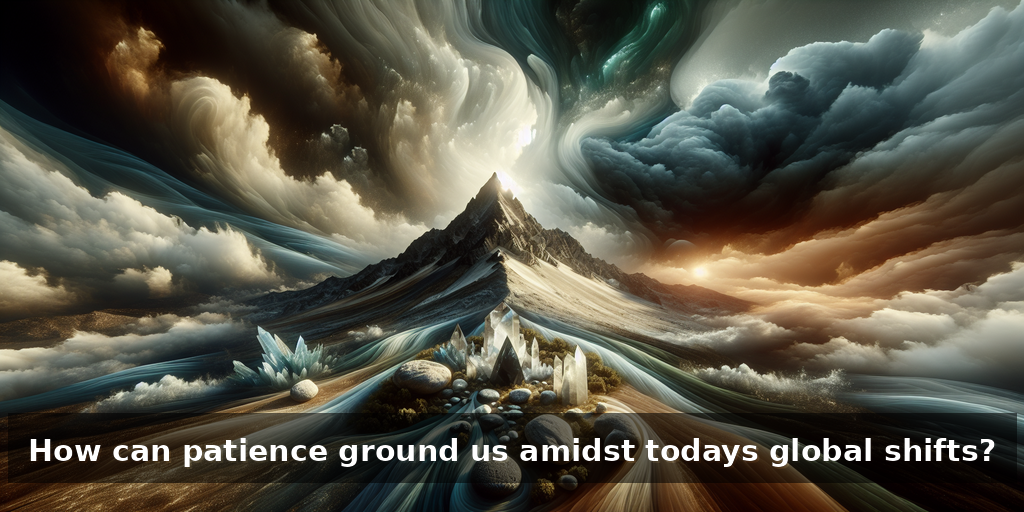
Today's astrological imagery reveals a mighty mountain standing firm as turbulent clouds swirl around it. This symbolizes the unwavering strength of Earth's element in Nine Star Ki, urging us to maintain stability amidst life's storms. How do you find stability in chaos?
📰 News Context & Nine Star Ki Connection
The shift towards protectionism aligns with Two Black Earth's energy, as nations hoard resources, amplifying the call for grounding and adaptability. Just like Hana contends with rising costs, this energy inspires resilience and strategic foundation-building.
⭐ Nine Star Ki Element Insights
The Earth element in Nine Star Ki signifies nurturing, stability, and patience, analogous to the solid ground beneath our feet. It encourages us to construct firm foundations, fostering resilience and long-term planning in the face of economic fluctuations.
🌟 Oracle Ayano's Guidance
Here are practical steps inspired by Earth's wisdom:
- Embrace Patience: Like Earth, allow time for thoughtful decisions. Hana could implement weekly financial reviews to understand and mitigate expenses.
- Build Resilience: Foster personal and professional networks, emphasizing local collaborations as support structures.
- Plan for the Long Term: Develop strategies that anticipate future shifts, such as exploring sustainable practices to weather economic changes.
- Stay Informed: Knowledge is power—stay updated on policy changes and market trends for informed decision-making.
📜 Historical Patterns
Reflecting on the Meiji era in Japan, we see how Earth's stability enabled rapid transformation. Just as nations assert control over resources today, grounding principles can guide us through evolution.
🔮 Future Cosmic Timing
The stars urge us to channel Earth's nurturing power to construct sustainable paths and strengthen community bonds. As we journey forward, let us embrace this energy to shape a resilient future.
In these transformative times, may Earth’s stability inspire you to navigate life's challenges with clarity and purpose. Join our discussion on X with #GroundingWisdom, and share your journey. Through the lens of Nine Star Ki, cosmic patterns offer not just guidance but empowerment to face modern challenges with courage and community.
![大切なことを言えずに待つメッセージ|A message waits for what matters — 2026-10-23 [日本語/English/中文/Español]](https://storage.ghost.io/c/60/6b/606b2e51-3e7d-4c53-b82b-952cb2b9b30b/content/images/size/w600/2026/10/feature-69.png)
![2026-10-23 マーケットブリーフィング|──AI期待から物理供給力へ [日本語/中文]](https://storage.ghost.io/c/60/6b/606b2e51-3e7d-4c53-b82b-952cb2b9b30b/content/images/size/w600/2026/10/feature-68.png)
![2026-10-22 Market Briefing | Brent, French Yields, Gold [English/Español]](https://storage.ghost.io/c/60/6b/606b2e51-3e7d-4c53-b82b-952cb2b9b30b/content/images/size/w600/2026/10/feature-67.png)