"India's AI Leap: Nine Star Ki Insights on Growth & Change"

Embracing India's AI Future: A Cosmic Perspective through Nine Star Ki
In a recent tweet, @chitnis_ posed a poignant question on "The Intelligence" podcast: “Should India invest, or have its own foundational model?” This inquiry centers on India's burgeoning role as a potential AI superpower and whether the nation should invest in existing AI technologies or develop its own foundational model. This move is not merely about technological prowess but also about aligning with India's strategic goals of technological self-reliance and digital sovereignty.
Background and Context
India is rapidly advancing its artificial intelligence (AI) capabilities, driven by the transformative potential of AI in numerous sectors. The government has demonstrated its commitment through the India AI Mission, which dedicates approximately ₹10,000 crore to democratize AI technology access. This initiative seeks to empower researchers, startups, and academic institutions, paving the way for significant contributions to the AI landscape. (Business Today)
A key component of this mission is the creation of India's first homegrown foundational AI model, aimed at rivaling international platforms like ChatGPT and DeepSeek, with a projected completion within ten months from February 2025. This undertaking is a strategic step in India's AI ambitions.
Political Implications
Developing an indigenous AI model aligns with India's strategic objectives of technological self-reliance and digital sovereignty. By investing in its own AI infrastructure, India aims to reduce its dependence on foreign technologies, enhance national security, and control critical digital assets. This initiative positions India as a formidable player in the global AI discourse, influencing international standards and policies.
Economic Implications
India's AI sector is on a growth trajectory, with projections that the market will reach $17 billion by 2027, growing annually at 25-35% from 2024 to 2027. This growth is driven by increased enterprise tech spending, a burgeoning AI talent pool, and rising investments. The development of a foundational AI model could further stimulate economic growth, fostering innovation, creating high-value jobs, and attracting domestic and international investments. (Reuters)
International Relations Implications
India's investment in its AI foundational model signals its commitment to becoming a global AI leader. This move could enhance its diplomatic leverage, enabling collaboration on AI R&D, establishing international partnerships, and participating in setting global AI standards. A robust AI infrastructure could serve as a strategic asset in international negotiations and collaborations.
🔮 Oracle Ayano's Mystical Commentary
Imagine a vibrant café in bustling Delhi, where Priya, a passionate entrepreneur, dreams of integrating AI into her business. As India stands on the precipice of becoming an AI superpower, individuals like Priya are filled with both excitement and uncertainty. The government’s commitment to developing India’s first homegrown foundational AI model by 2025 is more than a technological endeavor; it’s a leap towards digital sovereignty and self-reliance, with a projected market growth to $17 billion by 2027. But what does this mean for everyday citizens and the broader societal fabric?
🖼️ Visual Symbolism Analysis
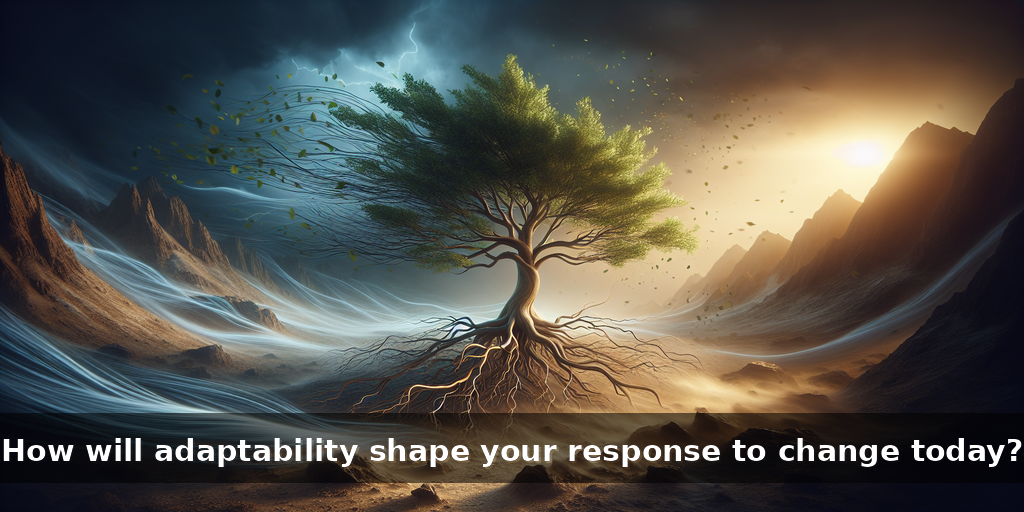
The image of a tree standing resilient amidst swirling winds beautifully captures Wood’s essence. It symbolizes the strength and adaptability needed to thrive in times of change. Just as the roots anchor the tree, our foundational values and beliefs support us through life’s storms.
📰 News Context & Nine Star Ki Connection
This news event aligns with the energy of the Three Blue Wood (三碧木星), symbolizing growth and expansion. India's bold leap towards AI innovation reflects the courage and adaptability inherent in the Wood element, mirroring a strategic push for technological self-reliance.
⭐ Nine Star Ki Element Insights
In the realm of Nine Star Ki, today’s energy is guided by the Three Blue Wood star, symbolizing growth, expansion, and new beginnings. Just as a sapling pushes through the soil towards the sun, India’s AI aspirations reflect a dynamic surge towards progress and vitality. Rooted in Japanese tradition, Nine Star Ki teaches us to find balance in change, and Wood’s energy encourages us to embrace new opportunities with courage and flexibility.
🌟 Oracle Ayano's Guidance
- Cultivate Adaptability: Like Wood swaying with the wind, practice flexibility in your daily routines. Priya, for instance, might explore AI tools that enhance customer engagement, adapting her café’s offerings to meet evolving consumer needs.
- Foster Growth: Invest time in learning new skills or technologies. Rahul, a single parent navigating economic uncertainty, could explore online courses to enhance his career prospects, turning uncertainty into opportunity.
- Embrace New Beginnings: Consider starting a project or hobby that excites you. Allow the energy of new beginnings to inspire creativity and exploration in your life.
📜 Historical Patterns
Reflecting on Japan’s Meiji era, we see how Wood’s traits of expansion and vitality spurred transformative railway reforms, setting a foundation for modernization. Similarly, India’s AI journey is not just about technological advancement; it’s a cultural evolution, reshaping how we connect, innovate, and influence the world stage. This historical parallel invites us to embrace change with purpose and a forward-thinking mindset.
🔮 Future Cosmic Timing
The stars reveal a future rich with potential as India's AI dreams unfold. In this cosmic symphony, let the wisdom of Wood guide your path. Embrace new paths with an open heart and let the energy of growth and adaptability inspire your journey towards a promising future.
As we navigate this era of rapid transformation, reflect on what steps you will take today to embrace growth and adaptability. Share your journey with us on X and connect with others in our weekly Spaces event. Embrace the wisdom of Wood and let it guide you towards a future filled with clarity, purpose, and community connection.
![忙しい今日にも小さな楽しみが待つ|A small joy awaits in today's full diary — 2026-10-25 [日本語/English/中文/Español]](https://storage.ghost.io/c/60/6b/606b2e51-3e7d-4c53-b82b-952cb2b9b30b/content/images/size/w600/2026/10/feature-73.png)