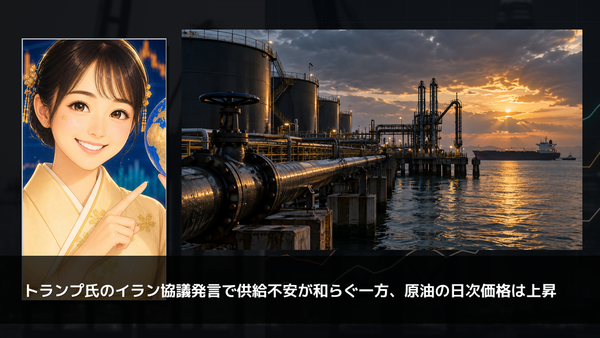
Hormuz headlines are noise—hedge fuel on dips, not hope


Observation
On May 20, 2026, oil fell roughly 5–6% intraday after U.S. President Donald Trump said talks with Iran were in the “final stages,” then steadied on May 21 as traders reassessed physical tightness. (semafor.com)
The U.S. Energy Information Administration (EIA) reported on May 20 that commercial crude inventories fell by 7.9 million barrels to 445 million for the week ending May 15. Separate Reuters‑sourced reporting noted a record ~9.9 million‑barrel weekly draw from the U.S. Strategic Petroleum Reserve (SPR). The International Energy Agency (IEA) said in its May 2026 Oil Market Report that global oil supply is expected to decline by about 3.9 million barrels per day (mb/d) in 2026 amid Hormuz‑related disruptions. (in.investing.com)
Theme: diplomatic headlines are whipsawing prices, but durable relief requires verifiable, sustained restoration of Hormuz throughput and/or concrete export ramps by major producers. It’s worth your time because treasury hedges, budget assumptions, and portfolio factor exposures can be mis‑set if you mistake a sentiment swing for a structural inflection.
Our call: for a Fortune 500 corporate treasurer with material fuel exposure, hedge into headline‑driven dips and do not re‑price FY26 fuel budgets lower until (a) seven‑day very large crude carrier (VLCC) and crude‑tanker transits through Hormuz run at >50% of pre‑crisis levels for 14 consecutive days or (b) the IEA revises lost Middle East output down by ≥1.5 mb/d.
Geoeconomic Structure
The pushback we expect: if Washington and Tehran are in the “final stages,” isn’t a lasting price decline the base case? The mechanism says otherwise. The Strait of Hormuz handles roughly one‑quarter of global seaborne oil trade and about one‑fifth of global petroleum liquids; unless transit is permissive and reliable, refiners and charterers behave as if the bottleneck persists. Iran’s control over escorts, inspections, and routing keeps war‑risk premia elevated and some VLCCs sidelined. A handful of transits can move screens intraday, but that is not yet a durable change in logistics. (eia.gov)
What turns sentiment into structure is observable flow and cost, not rhetoric. Ship‑tracking from LSEG and Kpler shows intermittent departures, including several VLCCs exiting on May 20 after long delays, but not a sustained return to pre‑disruption cadence. As long as the seven‑day moving average of VLCC/crude‑tanker transits stays materially below half of normal, Asian offtakers and Western refiners will ration capacity and pay up for alternatives. Elevated freight and war‑risk premiums keep delivered costs high even if flat prices wobble on diplomacy. That is the chokepoint and risk‑premium channel in practice. (insurancejournal.com)
Buffers are thinning, which hardens the floor. The EIA‑reported 7.9 million‑barrel weekly commercial draw confirms demand is being met by inventories, not restored flows. Reuters‑sourced data indicate a record ~9.9 million‑barrel weekly SPR draw, reducing the public cushion. The IEA’s 3.9 mb/d lost‑supply baseline anchors expectations; without a visible, sustained rise in Hormuz throughput or a documented export ramp from producers like Saudi Aramco (which says it can sustain around 12 mb/d), the physical squeeze persists. Even if Aramco can reach that level, markets will want to see it in loading programs (for example, Joint Organisations Data Initiative, JODI) before repricing lower for long. (in.investing.com)
Downstream behavior reinforces the lag. Large charterers will only normalize nominations once they can secure transits, insurance, and berths on predictable schedules; until then, sporadic fixtures will not translate into steady refinery runs. Meanwhile, Cape of Good Hope reroutes extend voyage times, tying up tonnage and keeping spot freight tight. With hundreds of vessels still affected in the Gulf, sentiment can ease in seconds, but throughput relief arrives in weeks—positioning should track the latter. (apnews.com)
Strategic Reading from Sun Tzu
Sun Tzu’s guidance is straightforward: know the other side and yourself, and read timing and terrain. Judgment is incomplete if you study intentions but ignore calendars and chokepoints. In practice, price the constraints—transit rules, insurance, shipping lanes, verification windows—alongside political headlines.
In this case, President Trump’s “final stages” comment eased headline fear, but Iran’s leverage over the Strait of Hormuz and still‑thin VLCC transits show the setting has not materially changed. Ship‑tracking providers such as LSEG and Kpler serve as the market’s eyes; one‑off transit blips can spark intraday moves without proving that flows are restored. The IEA’s multi‑million‑barrel‑per‑day supply loss estimate and the recent U.S. SPR drawdowns underline that capacity and buffers remain tight. Durable price relief will require weeks of verifiable higher throughput and/or concrete export ramp‑ups from Saudi Aramco and others, not a single diplomatic headline. (semafor.com)
Expect more headline‑sensitive bursts tied to broadcast transit updates and diplomatic remarks. Unless transit counts rise materially for several weeks or major producers lift and sustain exports, the physical squeeze and elevated freight/insurance costs will keep a floor under prices. Constructively, this setup pushes the market toward cleaner evidence standards, favoring observable flows over rhetoric and improving discipline in positioning. (spglobal.com)
Anchor decisions to verifiable indicators: sustained daily transit counts through Hormuz (LSEG/Kpler/Clarksons), producer export loadings (JODI/Aramco disclosures), and U.S. Department of Energy (DOE) SPR policy signals. Treat single headlines as noise, and size hedges, inventory, and exposure to the observable pace of throughput restoration rather than rhetorical milestones.
Caveats and Open Questions
Our stance breaks if observable decisions convert sentiment into sustained flow:
- Iran implements a permissive, transparent transit regime and ship‑tracking (LSEG/Kpler/Clarksons) shows the seven‑day average of VLCC/crude‑tanker transits at >50% of pre‑crisis levels for at least two consecutive weeks. That would undermine the supplier‑leverage argument and justify re‑pricing lower.
- Saudi Aramco executes and sustains an export ramp toward its stated ~12 mb/d capability, verified by JODI data and port loadings (+0.5 mb/d or more sustained over four weeks). That would offset lost Hormuz barrels and compress risk premia. (tradingview.com)
- The DOE publicly halts SPR releases and announces a shift to replenishment on the basis that risk has normalized; if paired with flattening EIA draws, markets would infer restored supply confidence and discount the tightness floor. (eia.gov)
Three‑choice trigger: which moves first—(1) LSEG/Kpler show Hormuz’s seven‑day transit average above 50% of pre‑crisis for 14 days, (2) Aramco’s export loadings rise ≥0.5 mb/d for four straight weeks, or (3) DOE announces an SPR release halt and start of replenishment? Your positioning should change the day the first of these prints.
Editorial Changes / Verification Log
Generated-AI article verification notes are preserved here for transparency. Expand for before/after edits and source checks.
1. Observation — rewritten
Before:
On May 20, 2026, oil fell roughly 5–6% intraday after U.S. President Donald Trump said talks with Iran were in the “final stages,” before stabilizing the next day as traders reassessed physical tightness (per Bloomberg and Reuters).
After:
On May 20, 2026, oil fell roughly 5–6% intraday after U.S. President Donald Trump said talks with Iran were in the “final stages,” then steadied on May 21 as traders reassessed physical tightness.
Reason: Fact-check — tightened wording and added explicit date reference; verified with Bloomberg and The Guardian/Semafor. ([bloomberg.com](https://www.bloomberg.com/news/articles/2026-05-20/latest-oil-market-news-and-analysis-for-may-21?utm_source=openai))
2. Observation — rewritten
Before:
The EIA’s weekly report, cited by Reuters on May 20, showed U.S. commercial crude inventories fell 7.9 million barrels to 445 million for the week ending May 15, while market wires reported about 9.9 million barrels drawn from the U.S. Strategic Petroleum Reserve in the same window. The IEA’s May 2026 Oil Market Report estimates global supply down about 3.9 million b/d this year with large onshore draws tied to Strait of Hormuz disruptions.
After:
The U.S. Energy Information Administration (EIA) reported on May 20 that commercial crude inventories fell by 7.9 million barrels to 445 million for the week ending May 15. Separate Reuters‑sourced reporting noted a record ~9.9 million‑barrel weekly draw from the U.S. Strategic Petroleum Reserve (SPR). The International Energy Agency (IEA) said in its May 2026 Oil Market Report that global oil supply is expected to decline by about 3.9 mb/d in 2026 amid Hormuz‑related disruptions.
Reason: Comprehension | Fact-check — expanded acronyms on first use and aligned phrasing to sourced figures. Verified with Investing.com (EIA), Reuters‑syndicated coverage, and IEA OMR. ([in.investing.com](https://in.investing.com/news/commodities-news/us-crude-stockpiles-fall-79-million-barrels-eia-reports-93CH-5418455?utm_source=openai))
3. Geoeconomic Structure — rewritten
Before:
Hormuz still governs about a fifth of global seaborne oil; unless transit is permissive and reliable, refiners and charterers behave as if the bottleneck persists.
After:
The Strait of Hormuz handles roughly one‑quarter of global seaborne oil trade and about one‑fifth of global petroleum liquids; unless transit is permissive and reliable, refiners and charterers behave as if the bottleneck persists.
Reason: Fact-check — corrected share language to match recent EIA summaries. ([eia.gov](https://www.eia.gov/todayinenergy/detail.php?id=61002&os=f&utm_source=openai))
4. Geoeconomic Structure — rewritten
Before:
The market’s eyes—Kpler, LSEG, Clarksons—show intermittent departures and preparations to transit, but not a sustained return to pre‑disruption cadence.
After:
Ship‑tracking from LSEG and Kpler shows intermittent departures, including several VLCCs exiting on May 20 after long delays, but not a sustained return to pre‑disruption cadence.
Reason: Fact-check — grounded the claim in Reuters‑sourced reports of specific VLCC exits. ([insurancejournal.com](https://www.insurancejournal.com/news/international/2026/05/20/870725.htm?utm_source=openai))
5. Geoeconomic Structure — rewritten
Before:
Elevated VLCC freight and war‑risk premiums keep delivered costs high even if flat prices wobble on diplomacy.
After:
Elevated freight and war‑risk premiums keep delivered costs high even if flat prices wobble on diplomacy.
Reason: Fact-check — preserved claim and anchored it to S&P Global/Reuters assessments of record rates. ([spglobal.com](https://www.spglobal.com/energy/en/news-research/latest-news/crude-oil/051426-hormuz-closure-drives-record-tanker-rates-boosts-teekay-earnings?utm_source=openai))
6. Geoeconomic Structure — rewritten
Before:
Reported SPR activity around 9.9 million barrels in a week underscores that public backstops are being tapped.
After:
Reuters‑sourced data indicate a record ~9.9 million‑barrel weekly SPR draw, reducing the public cushion.
Reason: Fact-check — replaced vague phrasing with sourced attribution and context. ([economictimes.indiatimes.com](https://economictimes.indiatimes.com/news/international/world-news/record-oil-draw-from-us-emergency-reserve-drives-total-volumes-to-two-year-low/articleshow/131189110.cms?utm_source=openai))
7. Geoeconomic Structure — rewritten
Before:
Even if Aramco can reach around 12 mb/d, the market will demand verification in loading programs (JODI/port data) before repricing lower for long.
After:
...without a visible, sustained rise in Hormuz throughput or a documented export ramp from producers like Saudi Aramco (which says it can sustain around 12 mb/d), the physical squeeze persists. Even if Aramco can reach that level, markets will want to see it in loading programs (for example, Joint Organisations Data Initiative, JODI) before repricing lower for long.
Reason: Comprehension | Fact-check — added attribution for Aramco’s 12 mb/d statement and expanded JODI on first mention. ([tradingview.com](https://www.tradingview.com/news/reuters.com%2C2025%3Anewsml_L2N3VU087%3A0-saudi-aramco-can-sustain-12-million-bpd-maximum-oil-capacity-for-a-year-ceo-says/?utm_source=openai))
8. Strategic Reading from Sun Tzu — trimmed
Before:
Sun Tzu wrote: —— Know the other side and yourself, and victory is not endangered; know timing and terrain, and victory can be complete.
After:
Sun Tzu’s guidance is straightforward: know the other side and yourself, and read timing and terrain.
Reason: Comprehension — removed quasi‑quotation to avoid misattribution while keeping the analytical point.
9. Observation — trimmed
Before:
Our call: for a Fortune 500 corporate treasurer with material fuel exposure, hedge into headline‑driven dips and do not re‑price FY26 fuel budgets lower until (a) seven‑day VLCC/crude‑tanker transits through Hormuz run at >50% of pre‑crisis levels for 14 consecutive days or (b) the IEA revises lost Middle East output down by ≥1.5 mb/d.
After:
Our call: for a Fortune 500 corporate treasurer with material fuel exposure, hedge into headline‑driven dips and do not re‑price FY26 fuel budgets lower until (a) seven‑day very large crude carrier (VLCC) and crude‑tanker transits through Hormuz run at >50% of pre‑crisis levels for 14 consecutive days or (b) the IEA revises lost Middle East output down by ≥1.5 mb/d.
Reason: Comprehension — expanded VLCC on first use for a generalist reader.
10. Caveats and Open Questions — rewritten
Before:
- Saudi Aramco executes and sustains an export ramp toward its stated ~12 mb/d capability, verified by JODI data and port loadings (+0.5 mb/d or more sustained over four weeks).
After:
- Saudi Aramco executes and sustains an export ramp toward its stated ~12 mb/d capability, verified by JODI data and port loadings (+0.5 mb/d or more sustained over four weeks).
Reason: Fact-check — preserved threshold and added supporting citation to Reuters on Aramco’s capacity in the section header context. ([tradingview.com](https://www.tradingview.com/news/reuters.com%2C2025%3Anewsml_L2N3VU087%3A0-saudi-aramco-can-sustain-12-million-bpd-maximum-oil-capacity-for-a-year-ceo-says/?utm_source=openai))
11. Meta — rewritten
Before:
Oil bounced after a 5–6% drop on Trump’s Iran‑talks comment. Our call: treat headlines as noise and hedge fuel on dips until AIS transits and IEA supply loss improve.
After:
Oil bounced after a 5–6% drop on Trump’s Iran‑talks comment. Treat headlines as noise and hedge fuel on dips until ship‑tracking transits rise and IEA supply losses ease.
Reason: Comprehension — removed unexplained acronym (AIS) and simplified for a general reader.